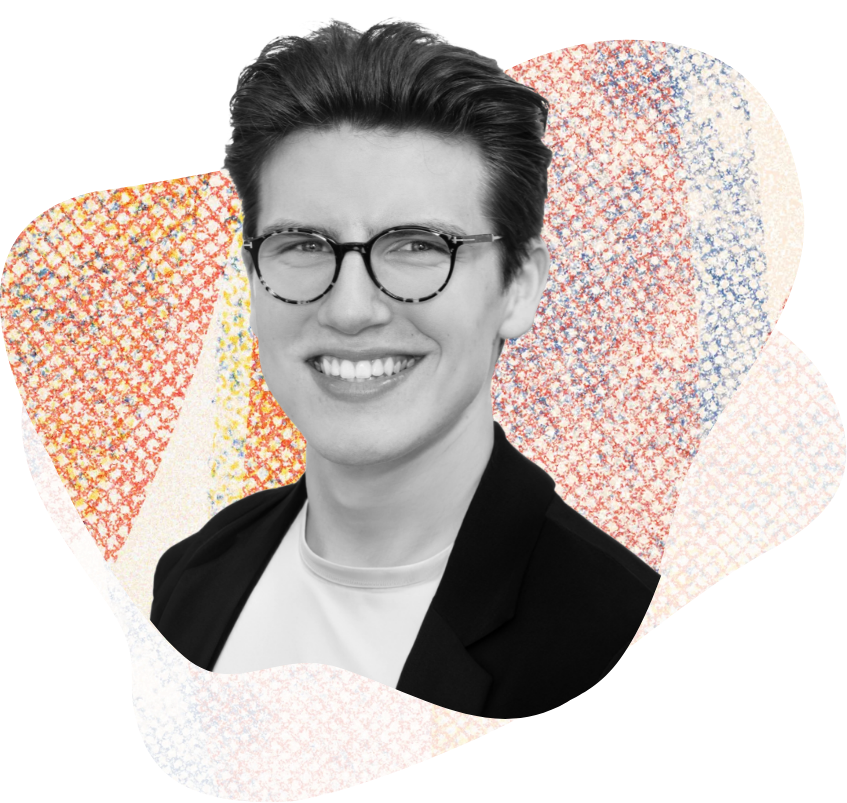
Howdy đź‘‹, I'm Oliver

Mixed-Methods UX Researcher
& Designer

Trained in cognitive neuroscience and HCI. I turn messy human problems into decisions and solutions teams can trust.

M.S. Applied Cognition 
& Neuroscience (HCI)
University of Texas at Dallas
B.S. Neuroscience 
(Pre-Health)
University of Texas at Austin
Selected Case Studies
Redefined Therapy case study
Redefined logo
Redefined Intimacy Therapy

From Family Practice to Specialty Care

Workshops, competitive analysis, and user journey mapping that gave a new specialty practice its brand, its voice, and its direction.

Brand Strategy
Competitive Analysis
Journey Mapping
Black Tie Dinner case study
BTD logo
Black Tie Dinner

From Interviews to a Redesign Blueprint

Stakeholder interviews, heuristic audits, and competitive benchmarking that helped shape the direction of a $32M non-profit's website overhaul.

UX Strategy
Heuristic Evaluation
Non-Profit
TillerXR case study
TillerXR logo
TillerXR

From Service to Software

Foundational research and a facilitated workshop that turned a startup's market pivot into a concrete product roadmap.

Foundational Research
Competitive Analysis
Workshop
TPSA case study
TPSA logo
TPSA

Stop Fixing Tickets. Fix the System.

Service blueprinting that helped a 2,500-member organization find the root cause — and redesign around it.

Service Blueprinting
Operations
Public Safety
Coming Soon

What Sets Me Apart

Most researchers uncover the problem. I also understand why it exists.

Mindset

I start with the science.

My M.S. in Cognitive Neuroscience isn't just a credential — it's a lens. I design studies around how memory, attention, and decision-making actually work, which means my findings are harder to dismiss and easier to act on.

I ask better questions.

Most bad research starts with a bad question. I spend as much time interrogating the brief as I do running the study — because the answer you get is only as good as what you asked.

I think in systems, not screens.

I don't just evaluate interfaces. I map the full service ecosystem — people, processes, and touchpoints — to find the real source of friction before proposing a fix.

Technical Skills

I do the analysis myself.

I build my own dashboards, run my own statistics, and write my own NLP pipelines in R. You get research and interpretation in one place, without hand-off gaps.

I can prototype what I propose.

From Figma wireframes to fully deployed Webflow sites — I don't just hand off a report. I can take a research finding all the way to a working product if the project needs it.

I work well under constraints.

HIPAA restrictions, startup budgets, volunteer-run organizations — I've delivered rigorous research in environments where the textbook approach wasn't available. I adapt the method to the reality.

Credentials & Community

I'm recognized in the field I work in.

I'm a 2026 QRCA Young Professional Grant Recipient — selected from a national pool for demonstrated contribution to qualitative research practice.

I'm part of the community, not just adjacent to it.

I volunteer on the QRCA marketing team and stay active in UXPA Dallas and IxDF. The networks I'm in aren't for job hunting — they're how I stay close to the field.

My work holds up after the project ends.

The service blueprint I delivered for TPSA is still in use. The Webflow site I built for Redefined Therapy is live. The analytics dashboard I designed is still running. I build things that last.

Research Methods
Indepth Interviews
Service Blueprinting
Diary
Study
Competitive
Research
Card
Sorting
Journey Mapping
A/B
Testing
Survey
Design
Multivariate statistics
Workshops
& Studios
Usability Testing
Machine Learning

My Tools

From discovery to delivery, these tools power my work.